In my own Reiki practice, one of the things I value most is creating a space where people feel comfortable simply slowing down.
As a Reiki Master Teacher, that is where I want to begin this conversation with you. You do not need to arrive feeling peaceful, knowing the right words, or understanding every idea behind Reiki. You can begin exactly where you are.
If your days have been full of caring, planning, and keeping up, I invite you to consider a quieter question: when did you last make room for yourself?
Reiki offers a setting for that pause. Rooted in a Japanese energy-healing tradition, it is based on beliefs about universal life-force energy and the practitioner’s role in channeling it. I share that spiritual framework with respect for its distinction from established medical evidence.
For me, the heart of this practice is space to become still, listen inward, and reconnect with yourself. I want that invitation to feel gentle.
What Happens During a Reiki Session?
When I explain Reiki, I like to start with your comfort. A session should leave room for questions, preferences, and the choice to say when something does not feel right for you.
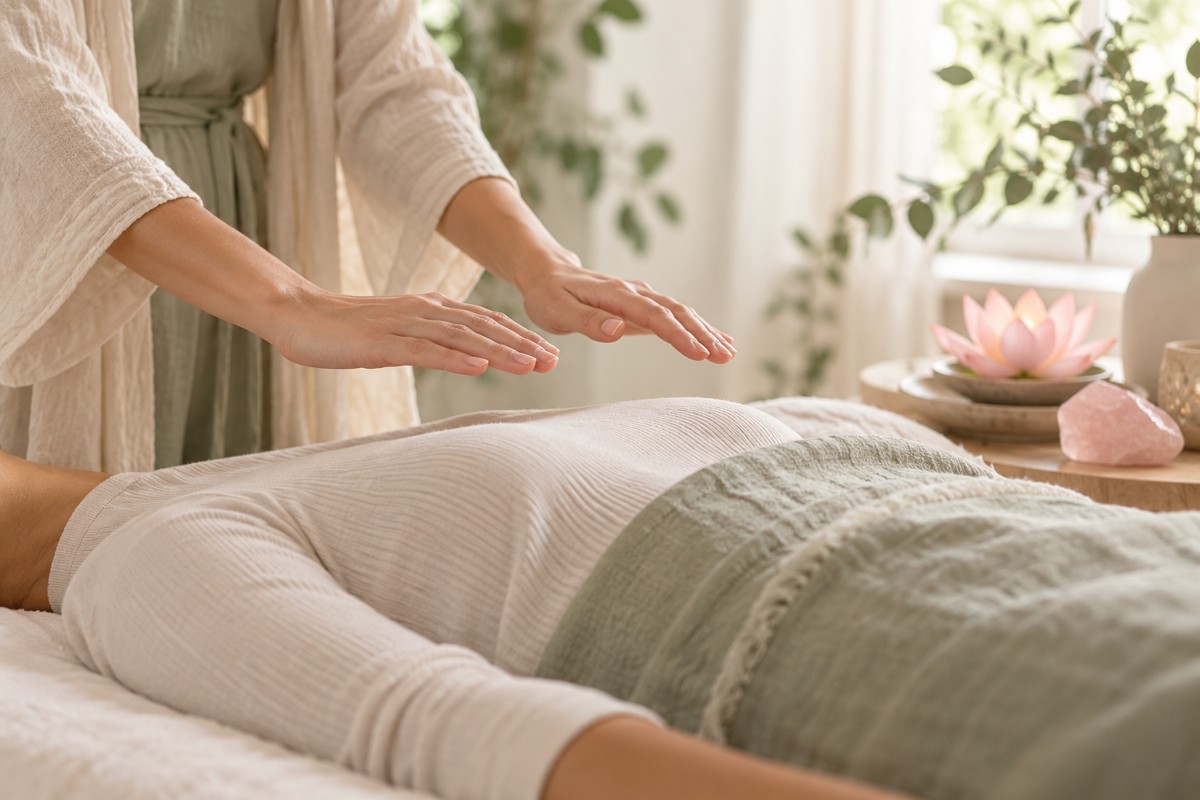
During an in-person Reiki session, you typically remain fully clothed while resting comfortably on a treatment table. The practitioner may gently place their hands on or just above different areas of the body, depending on the approach being used and your personal comfort.
There is nothing you need to “do” during Reiki.
You don't have to meditate perfectly, quiet every thought, or have any particular spiritual belief. You are simply invited to relax and receive the experience.
Everyone experiences Reiki differently. Some people describe sensations of warmth, tingling, heaviness, lightness, or deep relaxation. Others may experience emotions, imagery, or a feeling of peaceful stillness. And some people may not notice physical sensations at all.
I would never want you to measure your experience against someone else’s. Quiet, ordinary moments deserve room here too.
Why Do People Seek Reiki?
People are often drawn to Reiki during periods when they are seeking rest, reflection, emotional support, or a deeper connection with themselves.
Reiki may be incorporated into a personal wellness practice to encourage relaxation, mindfulness, and intentional self-care. Some people also choose Reiki as part of their spiritual journey or as a way to create quiet space during times of transition.
Rather than viewing Reiki as something that “fixes” us, I prefer to see it as an invitation to return to ourselves.
An invitation to become quiet enough to notice what we have been carrying.
An invitation to reconnect with our inner world.
An invitation to receive rather than constantly give.
Reiki and Your Energy
Many spiritual traditions work with the concept that we are more than our physical bodies—we also have an energetic aspect to our experience.
Within energy-based practices, emotional experiences, stress, relationships, and our environments are often believed to influence how balanced or depleted we feel.
Reiki practitioners work from the perspective that supporting energetic balance can encourage a greater sense of harmony and connection.
You don't need to fully understand energy work before experiencing Reiki. Curiosity and openness are enough.
Reiki Is Not a Replacement for Medical Care
Reiki is considered a complementary wellness practice. It should not be used as a substitute for medical treatment, mental health care, medication, or advice from a qualified healthcare professional.
Instead, Reiki can exist alongside appropriate professional care as part of a broader approach to personal wellness and self-care.
I believe there is room for both.
We can honor modern healthcare while also creating meaningful rituals and practices that nurture our emotional, spiritual, and energetic well-being.
Who Is Reiki For?
Reiki can be explored by people from many different backgrounds, belief systems, and stages of life.
You don't need to identify as spiritual.
You don't need experience with meditation.
You don't need to understand chakras, crystals, or energy work.
And you certainly don't need to have everything figured out.
My invitation is simple: give yourself permission to pause, without making the pause another thing you have to do perfectly.
✨ The Divine Practice: A Pause Without Performing
I invite you to try a small version of the slowing down I value in Reiki. This is a reflection exercise you can do on your own; it is not a Reiki treatment.
Sit somewhere comfortable. Keep your eyes open if you prefer. Rest your hands wherever they feel at ease.
Notice the support beneath you. Allow your breathing to stay natural. If it feels comfortable, take a few unhurried breaths.
Ask yourself: What would help me feel a little more comfortable right now?
Perhaps you need to adjust your seat, put your phone aside, or give yourself permission to stop for today. Choose one small response.
You do not need to finish feeling different. Let this be a moment in which you listened to yourself.
Journal Prompt
Where am I asking myself to keep going when I could make room for a gentle pause?
Affirmation
“I can slow down without having to earn it. I am allowed to make room for myself.”
Your Healing Journey Is Your Own
Healing does not always have to look dramatic.
Sometimes it looks like resting.
Sometimes it looks like setting a boundary.
Sometimes it looks like writing in your journal, holding a favorite crystal, sitting quietly with yourself, or allowing someone else to hold space for you.
And sometimes, healing begins with something as simple as deciding that you deserve a moment of peace.
At Divine Elements, my intention is to create a welcoming space where you can explore practices such as Reiki, crystal therapy, self-reflection, and holistic wellness in a way that feels authentic to you.
Your journey does not have to look like anyone else's.
It only has to belong to you.
With love and light,
Cindy
Divine Elements