If you have ever sat down to meditate and immediately started thinking about everything you needed to do, you do not need to count that moment as a failure.
You noticed your thoughts.
That noticing can be a place to begin.
I want mindfulness to feel like an invitation you can explore—not another standard you have to meet.
You do not need a perfectly quiet mind.
You do not need a special cushion.
And you do not need to begin with a long period of stillness.
What Is Mindfulness?
Mindfulness generally involves paying attention to present experience with openness and less judgment.
You might notice a sound, an ordinary activity, a thought, or the feeling of an object in your hand.
Meditation is a broader family of practices. Some involve mindfulness; others use different approaches, such as repeating a phrase or focusing on an image.
Research suggests some mindfulness and meditation approaches may help with certain concerns, but findings vary, and benefits are not guaranteed. These practices should not replace appropriate healthcare. NIH overview of meditation and mindfulness.
You can also explore them simply as personal practices of attention.
Your Mind Is Allowed to Wander
You may choose to listen to a sound, then notice that you are planning dinner.
You might return to the sound and later realize you have started thinking about yesterday.
There is no need to argue with yourself.
You can notice:
My attention has moved.
Then decide whether you would like to return.
I want that return to feel gentle. You are practicing attention, not proving that you can control every thought.
Begin With Something Ordinary
Mindfulness can fit into an activity you already do.
While washing a cup, notice its temperature and texture.
During a comfortable walk, notice a color or familiar sound.
While eating, give a little attention to the taste of a bite.
You do not need to turn the whole activity into an exercise.
A few moments may be enough.
Choose a setting where paying attention in this way does not interfere with safety or a task that needs your full focus.
Stillness Is One Option
Some people enjoy sitting quietly.
Others prefer movement, music, or attention directed toward their surroundings.
You can keep your eyes open.
You can change position.
You can choose a sound instead of your breath.
If focusing inward feels uncomfortable, an external point of attention may suit you better—or you may prefer a different activity altogether.
Meditation is not a requirement for spiritual connection.
Let Breathing Stay Comfortable
If you choose your breath as a point of attention, notice it without forcing it.
There is no need to hold your breath, make it unusually deep, or follow a demanding count.
You can simply observe a breath or two.
If that feels uncomfortable, shift your attention to something you can see or hear, or stop the practice.
Your ability to choose matters more than completing an exercise exactly as written.
Mindfulness Does Not Mean Accepting Every Situation
Noticing what is happening does not mean agreeing that it should continue.
You can acknowledge anger and set a boundary.
Notice exhaustion and ask for help.
Recognize worry and gather information.
A pause can create room to consider a response. It does not replace the response.
I want our practices to support your participation in life, including the practical changes you may need.
Make Room for Different Experiences
Meditation is often described as peaceful, but some people experience increased anxiety, distress, or other difficulties during or after practice. Research on potential harms remains limited. NIH guidance on meditation safety.
You do not need to push through discomfort to prove commitment.
Shorten the practice, choose another approach, or stop.
If difficulties persist, seek qualified support. A history of trauma or significant mental health concerns is a reason to discuss suitable approaches with a qualified professional.
Crystals Can Be Optional Companions
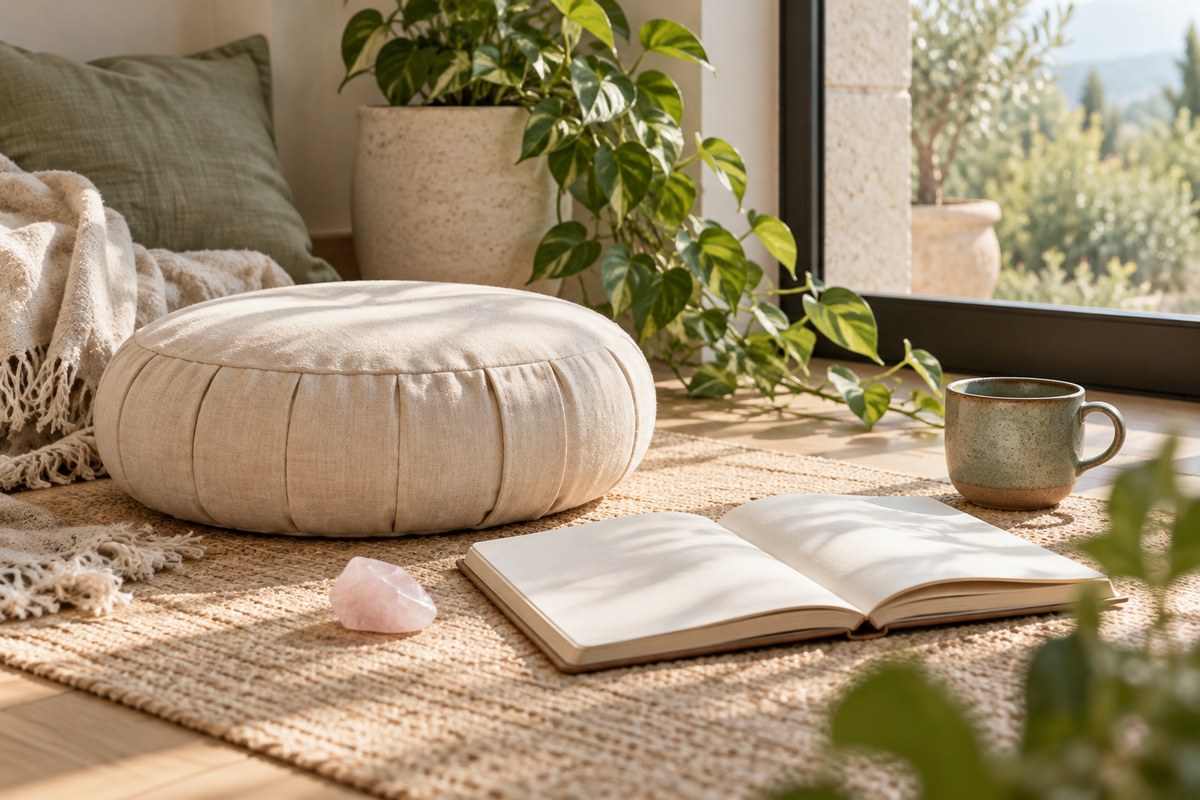
If crystals are part of your spiritual practice, you might place a familiar stone beside you.
Notice its color, shape, or texture.
Let it represent an intention such as patience or kindness.
The crystal does not need to change your energy or make meditation successful. Its role here is a personally meaningful point of attention.
A flower, a photograph, or an ordinary object can serve that purpose too.
✨ The Divine Practice: One Moment of Attention
Choose a comfortable place where you can pause briefly.
Keep your eyes open if you prefer.
Select one ordinary point of attention: a leaf, a familiar object, or a sound.
Notice one detail.
Perhaps a shade of green.
A curved edge.
The beginning and ending of a sound.
When your attention moves, simply notice that it has moved. Choose whether to return or finish.
Then ask:
What would be a thoughtful next step for me now?
Let the practice lead back into your day.
You do not need to finish feeling calmer. You have made a small space to notice and choose.
Journal Prompt
Which way of paying attention feels approachable to me, and how could I explore it without turning it into another expectation?
Affirmation
“I can notice this moment with kindness. My practice can be brief, flexible, and shaped by my needs.”
Return Without Pressure
In my own Reiki practice, one of the things I value most is creating a space where people feel comfortable simply slowing down.
That is the spirit I want to bring to mindfulness too.
Some days you may welcome quiet.
Other days you may prefer movement or conversation.
You can learn what suits you without comparing your experience with someone else’s.
Begin with one moment.
Keep your choices available.
Let your practice belong to you.
With love and light,
Cindy
Divine Elements